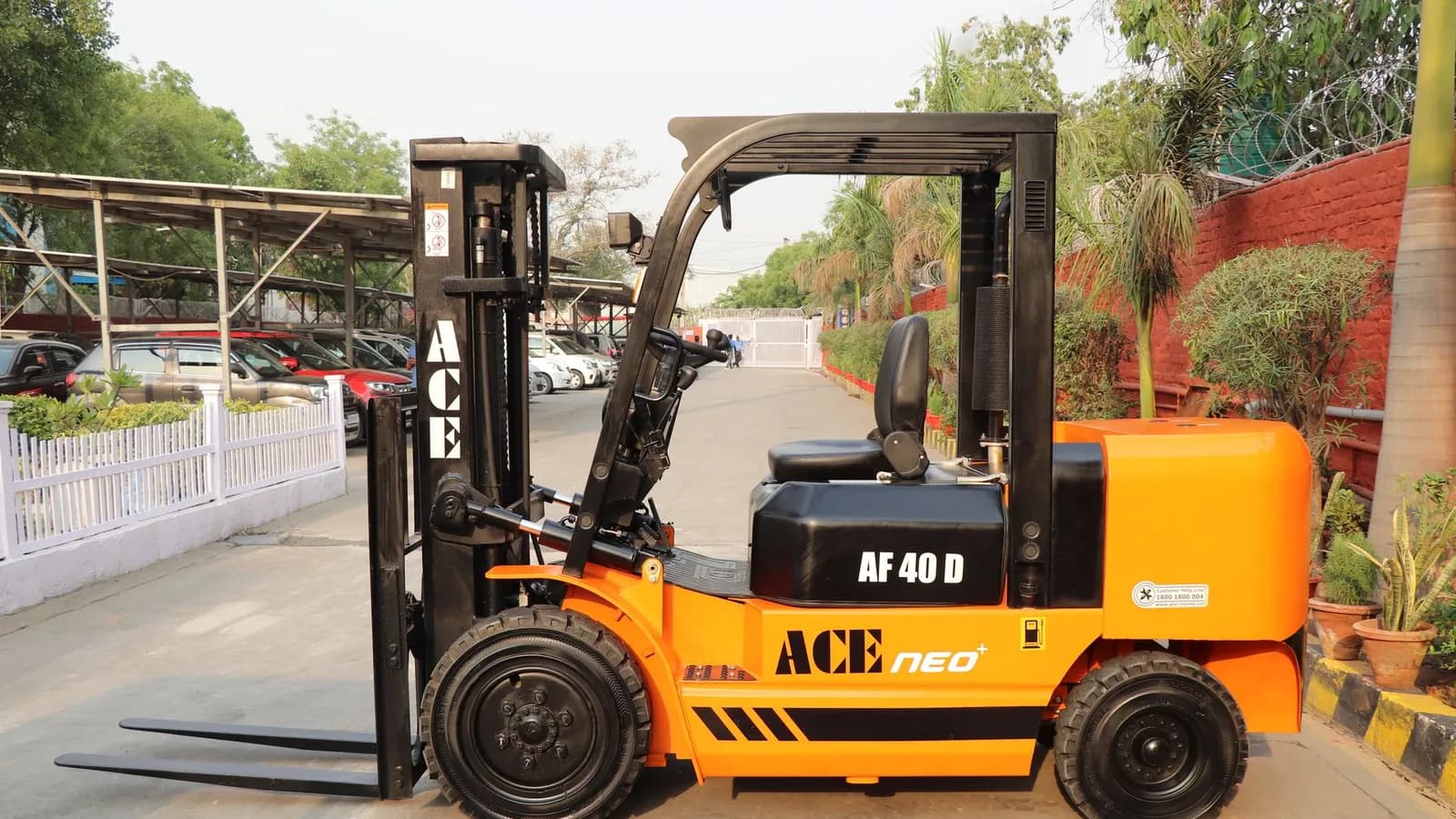
A well-chosen used forklift is an excellent investment: it delivers much of the performance of a new machine for a fraction of the price, provided you know what you are buying. Conversely, a tired or poorly maintained truck quickly turns into breakdowns, downtime, and risk for your operators. The difference comes down to the inspection. Before you sign, a few methodical checks separate a good deal from a future money pit. This guide sums up the points to check so you can buy a used forklift with confidence; it is part of our complete forklift guide, which covers the whole subject, from buying to renting.
In short: to buy a used forklift with confidence, read the hours on the meter rather than the age, inspect the mast, chains, and cylinders, check the wear on the forks and tires, then assess the battery or engine before finishing with a load test. Finally, ask for the service history and favour a checked used machine, serviced and guaranteed, which clearly lowers the risk compared with a private transaction.
Hours on the meter, not just age
The first instinct is to read the hour meter. On a forklift, the number of operating hours tells you far more than the year it entered service. A five-year-old machine that has run little can be in better shape than a newer model worked continuously across several shifts.
Relate the hours to the use: a warehouse truck on a smooth floor ages more slowly than a yard machine exposed to weather and knocks. Be wary of a meter reading that looks inconsistent with the visible wear on the controls, the seat, or the tires. Consistency between the hours shown and the general condition is a good sign of an honest seller.
Mast, chains, cylinders: wear, play, and leaks
The mast is the mechanical heart of the truck. Raise and lower it empty, then under load if possible, and watch: the movement should be smooth, with no jolts or abnormal noise. Check the rollers for wear, the chains for condition and tension, and the joints for excessive play.
The hydraulic cylinders deserve particular attention. A leak at the rod, oil traces on the mast, or a load that drifts down when held in the air all point to a costly hydraulic weakness. Inspect the hoses and fittings too: weeping, cracking, and makeshift repairs are all warning signs.
Forks and tires: critical wear items
Forks are safety components, not mere accessories. Check the wear at the heel: a widely accepted rule in the trade is that a fork worn more than 10 % below its original thickness should be retired. Look for cracks, especially at the heel and around the mounting holes, as well as any bend or abnormal gap between the two forks.
The tires tell the machine's story too. Crushed cushion tires, torn rubber, and uneven wear all affect stability and represent a cost to anticipate. Build the price of replacing forks and tires into your buying calculation. While you are at it, confirm the machine matches your real loads: our notes on load capacity and the load plate help you read a used data plate without getting it wrong.
Battery or engine, then a load test
On an electric truck, the battery is often the most expensive item. Find out its real capacity, its age, the number of cycles, and the watering history for lead-acid units. Ask to see the condition of the cells and how the charger behaves. A tired battery can represent a large share of the price of a new truck: it is a decisive factor in the negotiation.
On an engine-driven truck, listen to the engine cold then warm, watch for smoke, leaks, and responsiveness. In every case, finish with a load test: lift a representative weight to height, check stability, braking, steering, and that the mast does not drift. A serious seller never refuses a real test. The choice between an electric and an engine-driven truck also depends on your working environment; our comparison of diesel, LPG, and electric power spells out the trade-offs to know before buying used.
History, service records, and warranty
Beyond physical condition, the service history is worth its weight in gold. Ask for the service records, the maintenance log, and proof of periodic inspections. Regular, dated, documented follow-up is far more reassuring than a machine described as "like new" with nothing to back it up.
This is where a checked used machine truly pays off. A unit reconditioned by a professional, serviced, with its wear points addressed and covered by a warranty, is far safer than a private deal on an unknown machine. At HER, our checked used equipment rests on exactly this logic: gear that is inspected, restored, and guaranteed.
One underlying question remains: should you buy or rent? If your need is occasional or uncertain, renting avoids tying up capital. We covered this in our article on renting versus buying a forklift, worth reading before you decide. And if you lean toward a flexible option, see our pointers on forklift rental in Casablanca.
Frequently asked questions
Should I look at the age or the hours on the meter of a used forklift?
The hours on the meter tell you far more than the year it entered service. A five-year-old machine that has run little can be in better shape than a newer model worked continuously across several shifts.
How do I know whether the forks are still good?
Check the wear at the heel: a widely accepted rule in the trade is that a fork worn more than 10 % below its original thickness should be retired. Also look for cracks, especially at the heel and around the mounting holes, as well as any bend or abnormal gap between the two forks.
Why finish the inspection with a load test?
A load test means lifting a representative weight to height to check stability, braking, steering, and that the mast does not drift. A serious seller never refuses a real test.
Is a checked used machine safer than buying from a private seller?
Yes: a unit reconditioned by a professional, serviced, with its wear points addressed and covered by a warranty, is far safer than a private deal on an unknown machine.
Explore our checked used equipment or request an assessment.